
About Catherine
About Catherine
Catherine Cruveillier is an international practice expert in individual, organizational, and large-scale human development and transformation, with over forty years of experience. She is also a pioneer in applied ecological economics: investing in humans as stewards of each other, of life and nature, in service of a higher purpose.
“Understand and be understood” could be Catherine's motto and evergreen pursuit. Decades of rigorous personal development led her to uncover the profound spiritual power of human words on our reality. She now shares this wisdom through writing, speaking, and facilitating Socratic conferences, where participants learn and practice the kind of communication that leads from chaos to harmony.
Catherine is the author of two pamphlets: Five Keys to Communicate Sustainability for Success and In Defense of Sustainable Human Development — How to Heal the World by Reconciling Words with Their Meaning.
Born in 1955 in Limoges, France and raised across Austria, Mexico, Brazil, and Canada, Catherine was exposed early to radically different cultural, ecological, and economic systems, as well as to the inequalities that exist among humans. She embraced a career in international development to help change that.
Catherine has collaborated with top leadership across governments, major corporations, and international bodies. Her pioneering fieldwork began in the early 1980s in Brazil with the United Nations Development Programme, where she was among the first practitioners to translate the emerging concept of "sustainable development" into concrete action in the Amazon. By the 1990s, at the World Bank, she supported several African governments in designing their first participatory Environmental Action Plans and setting up large-scale biodiversity conservation programs supported by the Global Environment Facility, then in its pilot phase. She also oversaw large investment projects in small holders' agriculture.
Later, at the International Finance Corporation (IFC), Catherine helped transform how nature is treated in private-sector led global developmental work. She co-authored the "Biodiversity Conservation and Sustainable Management of Living Natural Resources" performance standard for investment projects. She fought to introduce a groundbreaking concept at the time: that nature is not separate from humans, exists everywhere, not only in conservation areas, and therefore must be protected across all human operations and landscapes. This conceptual shift started rewriting the rules for corporate responsibility. It later became embedded across the World Bank Group's environmental and social standards and serves as the foundation for the Equator Principles—a baseline framework adopted by major global financial institutions worldwide to ensure ethical and environmentally sound project funding.
As head of the Biodiversity and Business program at the IFC, Catherine led large multi-stakeholder initiatives designed to shift industry-wide practices. Among others, she designed and directed the Biodiversity and Agricultural Commodities Program (BACP), a ten-year global grant-making facility supporting the introduction of better management practices in the palm oil, soy, cocoa, and sugarcane sectors. Partnering with other pioneering public good organizations and private corporations, she facilitated the setting up and initial funding of global round tables that bring together corporate entities, investors, and civil society to agree on and commit to ever stricter social and environmental standards. Her program was singled out in a 2013 report by the World Bank's Independent Evaluation Group as unusually effective due to its powerful partnerships, clear documents and metrics, and rigorous monitoring systems.
Catherine's innovative program at IFC also included a few experimental projects aimed at testing new business models on a small scale before they could be replicated and multiplied. One such initiatives, featured in The Wall Street Journal, illustrated how alliances among private companies, local communities, religious leaders, and governments could protect endangered species while strengthening livelihoods and local economies. Other projects tested the development and applicability of innovative financial instruments and facilities to help people make money from protecting nature instead of destroying it.
In the first decade of the 2000's, Catherine was one of a small group of collaborating international experts on the topic of nature and business, who pushed for a disruptive idea: that markets can behave in support of life and nature. They knew because they were making it happen on the ground. She presented at several Conferences of the Parties (COPs) and supported the secretariat of the Convention on Biological Diversity (CBD), among others as an advisor to its newsletter.
After three decades of navigating complex global institutions and networks and a fourth decade coaching executives to do the same, Catherine developed an independent methodology to drive true organizational and large-scale transformation. Drawing on Socratic inquiry, mindfulness practices, behavioral science and leadership psychology, she now facilitates highly interactive "Socratic conferences." In these intense, transformative workshops, Catherine guides leaders to dismantle abstract jargon and align their words with a deeper yet much simpler truth. This approach empowers organizations with their own inner wisdom to manifest the realities they seek and convert chaos-inducing vague rhetoric into clear alignment, transforming entrenched blockages into effortless action and desired impact.
Initially offered for free on this website and currently being published as an upgraded version, her book Five Keys to Communicate Sustainability for Success examines why crucial sustainability initiatives so often stall despite massive investments, effort, and immense goodwill. Catherine can demonstrate that these failures originate in language that overwhelms, exhausts, and obscures rather than clarifies. The book explores the high cost of resistance and burnout in leadership, proposing an alternative method grounded in precision, simplicity, and attentiveness.
Her second book, In Defense of Sustainable Human Development - How to Heal the World by Reconciling Words with Their Meaning, expands and deepens these themes to analyse the relationship between language, perception, action, and impact. The book will be published in 2026 in both English and French.
Catherine's practice is grounded in the conviction that “sustainability” must be experienced, embodied, so that it can be fully understood—that it has a texture, rhythm, and a reality that can be sensed in daily decisions and institutional behavior. Her research and practice explore questions such as: Why do sustainability commitments so often fail? How can organizations reconcile words, values, and material outcomes? What conditions allow ethical development to become factual reality? At the heart of her work lies a belief that genuine learning does not emerge from intellectual posturing. Rather, it depends on curiosity, attentiveness, and the willingness to see familiar problems with fresh eyes—a genuinely scientific attitude!
A Highly Sensitive Person by birth, Catherine has cultivated the capacity to perceive subtle emotional and energetic dynamics with exceptional precision, integrating this deep awareness into every experience, particularly in her work with words and communication. It allowed her to understand how the simplest words (not the big abstract intellectual ones) are the ones with the most astonishing creative power.
Catherine holds a degree in Business Administration from HEC Paris with a major in economics and later earned a Leadership Coaching Certificate from Georgetown University. She speaks four languages fluently, and is also a mother, a singer, an entrepreneur and a devourer of books.
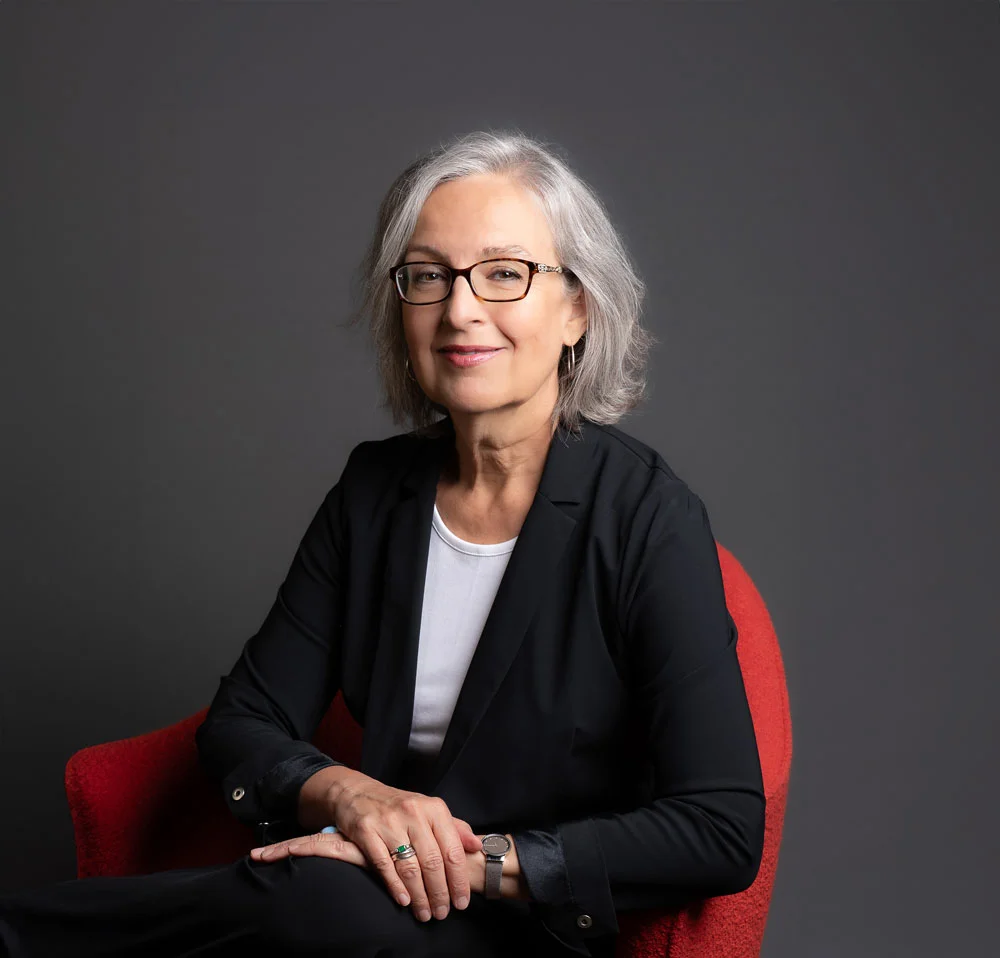
Catherine Cruveillier is an international practice expert in individual, organizational, and large-scale human development and transformation, with over forty years of experience. She is also a pioneer in applied ecological economics: investing in humans as stewards of each other, of life and nature, in service of a higher purpose.
“Understand and be understood” could be Catherine's motto and evergreen pursuit. Decades of rigorous personal development led her to uncover the profound spiritual power of human words on our reality. She now shares this wisdom through writing, speaking, and facilitating Socratic conferences, where participants learn and practice the kind of communication that leads from chaos to harmony.
Catherine is the author of two pamphlets: Five Keys to Communicate Sustainability for Success and In Defense of Sustainable Human Development — How to Heal the World by Reconciling Words with Their Meaning.
Born in 1955 in Limoges, France and raised across Austria, Mexico, Brazil, and Canada, Catherine was exposed early to radically different cultural, ecological, and economic systems, as well as to the inequalities that exist among humans. She embraced a career in international development to help change that.
Catherine has collaborated with top leadership across governments, major corporations, and international bodies. Her pioneering fieldwork began in the early 1980s in Brazil with the United Nations Development Programme, where she was among the first practitioners to translate the emerging concept of "sustainable development" into concrete action in the Amazon. By the 1990s, at the World Bank, she supported several African governments in designing their first participatory Environmental Action Plans and setting up large-scale biodiversity conservation programs supported by the Global Environment Facility, then in its pilot phase. She also oversaw large investment projects in small holders' agriculture.
Later, at the International Finance Corporation (IFC), Catherine helped transform how nature is treated in private-sector led global developmental work. She co-authored the "Biodiversity Conservation and Sustainable Management of Living Natural Resources" performance standard for investment projects. She fought to introduce a groundbreaking concept at the time: that nature is not separate from humans, exists everywhere, not only in conservation areas, and therefore must be protected across all human operations and landscapes. This conceptual shift started rewriting the rules for corporate responsibility. It later became embedded across the World Bank Group's environmental and social standards and serves as the foundation for the Equator Principles—a baseline framework adopted by major global financial institutions worldwide to ensure ethical and environmentally sound project funding.
As head of the Biodiversity and Business program at the IFC, Catherine led large multi-stakeholder initiatives designed to shift industry-wide practices. Among others, she designed and directed the Biodiversity and Agricultural Commodities Program (BACP), a ten-year global grant-making facility supporting the introduction of better management practices in the palm oil, soy, cocoa, and sugarcane sectors. Partnering with other pioneering public good organizations and private corporations, she facilitated the setting up and initial funding of global round tables that bring together corporate entities, investors, and civil society to agree on and commit to ever stricter social and environmental standards. Her program was singled out in a 2013 report by the World Bank's Independent Evaluation Group as unusually effective due to its powerful partnerships, clear documents and metrics, and rigorous monitoring systems.
Catherine's innovative program at IFC also included a few experimental projects aimed at testing new business models on a small scale before they could be replicated and multiplied. One such initiatives, featured in The Wall Street Journal, illustrated how alliances among private companies, local communities, religious leaders, and governments could protect endangered species while strengthening livelihoods and local economies. Other projects tested the development and applicability of innovative financial instruments and facilities to help people make money from protecting nature instead of destroying it.
In the first decade of the 2000's, Catherine was one of a small group of collaborating international experts on the topic of nature and business, who pushed for a disruptive idea: that markets can behave in support of life and nature. They knew because they were making it happen on the ground. She presented at several Conferences of the Parties (COPs) and supported the secretariat of the Convention on Biological Diversity (CBD), among others as an advisor to its newsletter.
After three decades of navigating complex global institutions and networks and a fourth decade coaching executives to do the same, Catherine developed an independent methodology to drive true organizational and large-scale transformation. Drawing on Socratic inquiry, mindfulness practices, behavioral science and leadership psychology, she now facilitates highly interactive "Socratic conferences." In these intense, transformative workshops, Catherine guides leaders to dismantle abstract jargon and align their words with a deeper yet much simpler truth. This approach empowers organizations with their own inner wisdom to manifest the realities they seek and convert chaos-inducing vague rhetoric into clear alignment, transforming entrenched blockages into effortless action and desired impact.
Initially offered for free on this website and currently being published as an upgraded version, her book Five Keys to Communicate Sustainability for Success examines why crucial sustainability initiatives so often stall despite massive investments, effort, and immense goodwill. Catherine can demonstrate that these failures originate in language that overwhelms, exhausts, and obscures rather than clarifies. The book explores the high cost of resistance and burnout in leadership, proposing an alternative method grounded in precision, simplicity, and attentiveness.
Her second book, In Defense of Sustainable Human Development - How to Heal the World by Reconciling Words with Their Meaning, expands and deepens these themes to analyse the relationship between language, perception, action, and impact. The book will be published in 2026 in both English and French.
Catherine's practice is grounded in the conviction that “sustainability” must be experienced, embodied, so that it can be fully understood—that it has a texture, rhythm, and a reality that can be sensed in daily decisions and institutional behavior. Her research and practice explore questions such as: Why do sustainability commitments so often fail? How can organizations reconcile words, values, and material outcomes? What conditions allow ethical development to become factual reality? At the heart of her work lies a belief that genuine learning does not emerge from intellectual posturing. Rather, it depends on curiosity, attentiveness, and the willingness to see familiar problems with fresh eyes—a genuinely scientific attitude!
A Highly Sensitive Person by birth, Catherine has cultivated the capacity to perceive subtle emotional and energetic dynamics with exceptional precision, integrating this deep awareness into every experience, particularly in her work with words and communication. It allowed her to understand how the simplest words (not the big abstract intellectual ones) are the ones with the most astonishing creative power.
Catherine holds a degree in Business Administration from HEC Paris with a major in economics and later earned a Leadership Coaching Certificate from Georgetown University. She speaks four languages fluently, and is also a mother, a singer, an entrepreneur and a devourer of books.